What Is Conversion Rate? A Beginner's Guide to Understanding How Marketing Turns Visitors into Results
Conversion Rate measures how effectively your marketing turns visitors into meaningful actions, such as downloading an eBook, registering for a webinar, requesting a demo, or making a purchase. Learn what Conversion Rate is, how it's calculated, and why it's one of the most important metrics in B2B marketing.

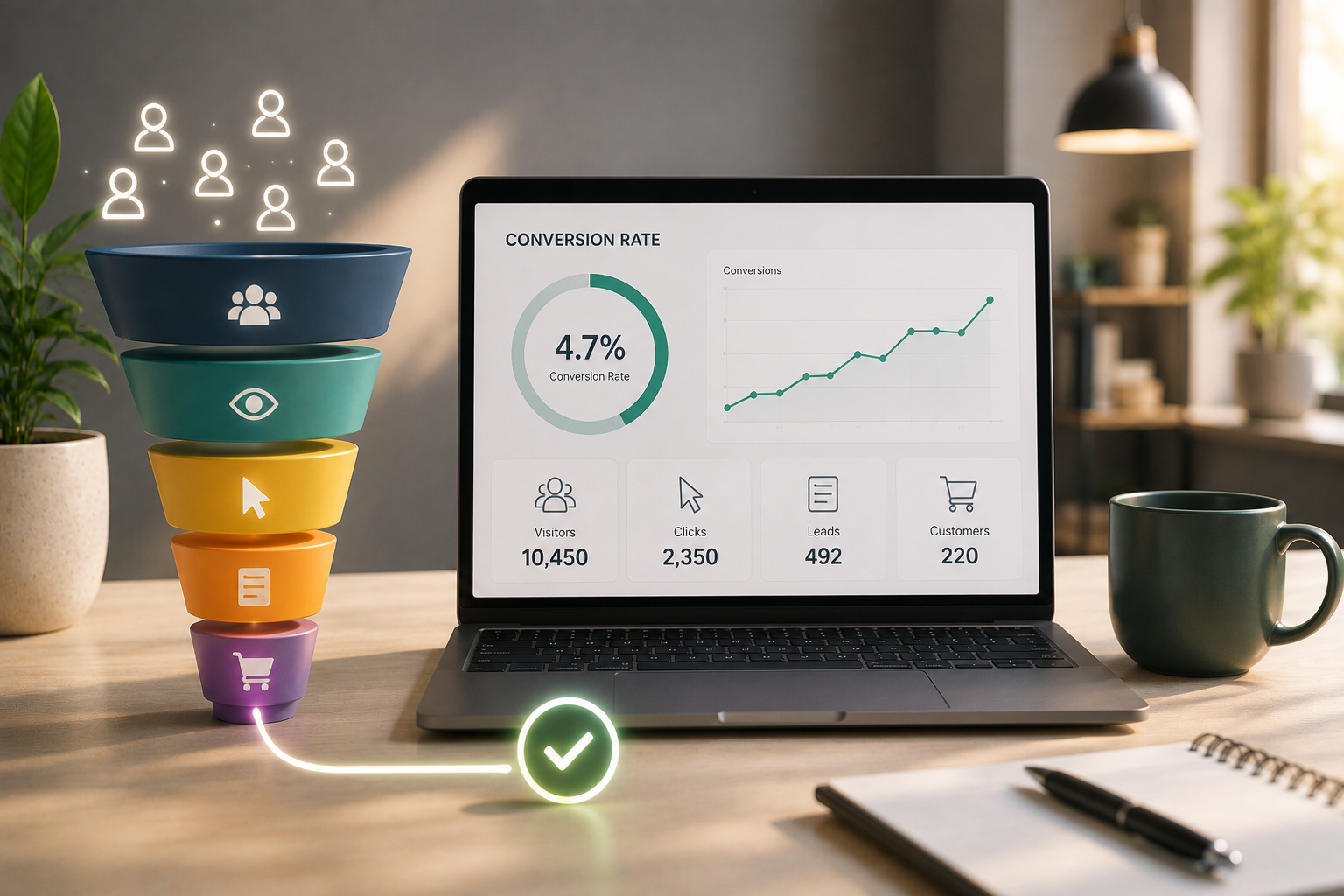
Imagine your company launches a new landing page offering a free industry report.
Over the next month:
-
5,000 people visit the landing page.
-
400 people download the report.
Now here's an important question.
Did your landing page perform well?
Simply knowing that 400 people downloaded the report doesn't tell you the complete story.
What really matters is how many of the visitors actually completed the action you wanted them to take.
That's exactly what Conversion Rate measures.
In this guide, you'll learn what Conversion Rate is, how it's calculated, why it matters, and how businesses use it to improve their marketing campaigns and customer experience.
What Is Conversion Rate?
Conversion Rate is the percentage of people who complete a desired action after interacting with your marketing campaign, website, advertisement, or landing page.
In simple words, it answers one question:
"Out of everyone who had the opportunity to take action, how many actually did?"
The important phrase here is desired action.
A conversion doesn't always mean making a purchase.
Depending on the campaign, a conversion could be:
-
Downloading an eBook.
-
Registering for a webinar.
-
Filling out a contact form.
-
Requesting a product demo.
-
Starting a free trial.
-
Subscribing to a newsletter.
-
Booking a meeting.
-
Purchasing a product.
The desired action depends entirely on the objective of the campaign.
Let's Understand This with an Example
Imagine your company creates a landing page promoting a cybersecurity webinar.
During one month:
-
2,000 people visit the page.
-
150 people register for the webinar.
Your Conversion Rate is:
(150 ÷ 2,000) × 100 = 7.5%
This means that, on average, 7.5 out of every 100 visitors completed the action you wanted.
That's what Conversion Rate measures.
It tells you how effectively your campaign turns interest into action.
Why Is Conversion Rate Important?
Imagine two companies promote the same webinar.
Company A
-
20,000 visitors
-
400 registrations
Company B
-
5,000 visitors
-
750 registrations
Which campaign performed better?
Many beginners would immediately choose Company A because it attracted more visitors.
But Company B actually convinced a much larger percentage of its visitors to register.
In other words, Company B had a much stronger Conversion Rate.
This is why marketers don't judge campaigns only by traffic.
Traffic creates opportunities.
Conversions create results.
How Is Conversion Rate Calculated?
The formula is straightforward.
Conversion Rate = (Number of Conversions ÷ Total Visitors or Total Clicks) × 100
For example:
A landing page receives:
-
4,000 visitors
Out of those visitors:
-
320 request a product demonstration.
The Conversion Rate becomes:
(320 ÷ 4,000) × 100 = 8%
The formula is simple.
Understanding why people convert—or why they don't—is where marketers spend most of their time.
What Counts as a Conversion?
One of the biggest misconceptions is that conversions always mean sales.
That's not true.
A conversion is simply the action your campaign is designed to achieve.
For example:
Awareness Campaign
Conversion:
-
Reading an article
-
Watching a video
Lead Generation Campaign
Conversion:
-
Downloading an eBook
-
Completing a lead form
-
Registering for a webinar
Sales Campaign
Conversion:
-
Requesting a demo
-
Booking a consultation
-
Purchasing a product
Different campaigns have different goals, so they naturally have different conversions.
Why Doesn't Every Visitor Convert?
Imagine you walk into a bookstore.
You browse for twenty minutes.
Read the back cover of several books.
Then leave without buying anything.
Does that mean the bookstore failed?
Not necessarily.
You may simply not have been ready.
The same thing happens online.
Visitors may leave without converting because:
-
They're still researching.
-
They don't need the product yet.
-
The timing isn't right.
-
They want to compare alternatives.
-
They need approval from colleagues.
-
The offer doesn't match their current needs.
This is completely normal, especially in B2B marketing where buying decisions often take weeks or months.
What Can Affect Conversion Rate?
Many different factors influence whether people take action.
Some of the most important include:
The Offer
People are more likely to convert if they receive something valuable.
Examples include:
-
Research reports
-
Whitepapers
-
Industry guides
-
Templates
-
Free consultations
-
Product demonstrations
Landing Page Experience
A confusing or cluttered landing page often reduces conversions.
Clear messaging, simple forms, and a logical layout help visitors complete the desired action.
Audience Quality
Even the best landing page will struggle if it's attracting the wrong audience.
Successful campaigns focus on reaching people who match the company's Ideal Customer Profile (ICP).
Trust
Visitors are more likely to convert when they trust your business.
Trust can be built through:
-
Customer testimonials
-
Case studies
-
Industry certifications
-
Transparent messaging
-
Professional design
Call-to-Action (CTA)
Visitors should immediately understand what they're expected to do.
Simple CTAs such as:
-
Download the Guide
-
Register Now
-
Book a Demo
Keep Reading
You've reached the end of your free preview. Create a free account to read the rest of this article and unlock the full B2Bmedium library.